
Nearly 800 Air Traffic Controllers to Receive $10,000 After Calling No Sick Days During Shutdown
- saniduabeysinghe17
- Nov 21, 2025
- 4 min read
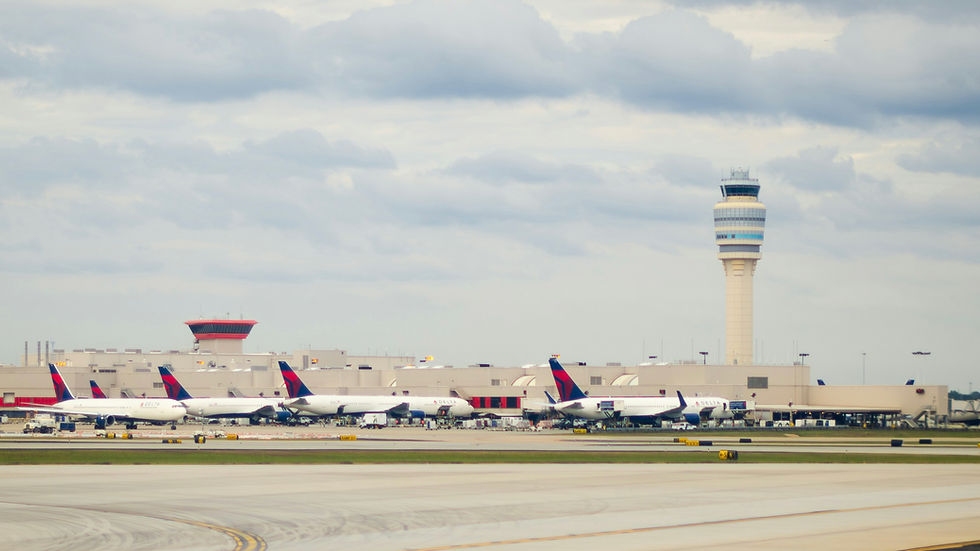
In a controversial move following the record-long U.S. government shutdown, the Federal Aviation Administration (FAA) announced that 776 — roughly “nearly 800” — air traffic controllers and technicians who had perfect attendance during the 43-day shutdown will each receive a $10,000 bonus. The announcement, made by Transportation Secretary Sean Duffy, has drawn both praise for recognizing frontline dedication and criticism for leaving thousands of other aviation employees who also worked without pay out of the program.
What the FAA announced — the basics
The FAA said the bonuses target controllers and technicians who did not miss a single scheduled shift during the shutdown — a small slice of the roughly 20,000 controllers and technicians in the agency workforce. The award was framed as recognition of employees who “never missed a beat” while ensuring the safety of the flying public despite working without pay for six weeks. Transportation Secretary Duffy posted about the awards on X (formerly Twitter), calling it an early holiday “thank you.”
Why the decision is controversial
While many applauded the idea of recognizing employees who kept the system running under stressful conditions, unions and some lawmakers criticized the selection criteria as arbitrary and exclusionary. The National Air Traffic Controllers Association (NATCA) said only 311 of its members would receive the bonus, leaving the vast majority of controllers who also worked through the shutdown without recognition. Other unions representing technicians and safety specialists argued that thousands of support staff — including more than 6,600 technicians expected to be working during the shutdown — played essential roles and should not be left out.
Union leaders point out practical reasons some staff missed shifts: lack of childcare, inability to commute without pay, or having to take temporary side work to meet basic needs during the shutdown. Critics argue that rewarding only perfect attendance fails to account for such pressures and unfairly penalizes employees who nonetheless performed crucial duties.
Political context: where the idea came from
The bonus idea surfaced after public comments from former President Donald Trump and was later echoed in policy moves by members of the administration. Trump had called for $10,000 “patriot” bonuses for controllers who did not call out during the shutdown; Transportation Secretary Duffy and the FAA implemented the measure, which some see as a politically charged reward tied to loyalty narratives around the shutdown. That context has amplified scrutiny of how recipients were chosen.
How many people were affected and who was excluded
Recipients: 776 air traffic controllers and technicians will receive $10,000 each.
Excluded: Almost 20,000 other FAA controllers and technicians did not receive the bonus; the NATCA union said just 311 of its members were selected for the payout. Many TSA officers and other frontline staff who worked unpaid throughout the shutdown were discussed in similar bonus programs announced by other agencies, but final recipient counts and selection rules vary.
Officials said recipients were selected based on strict “perfect attendance” records. That narrow metric resulted in a small pool of awardees relative to those who kept the national air system functioning during the shutdown and leaves unresolved questions about fairness and morale.
Operational impact during the shutdown — why the awards matter operationally
The shutdown revealed how thinly staffed some FAA facilities had become: controllers and technicians worked under considerable stress, and agencies sometimes reduced airport capacity or re-routed flights because of absenteeism and fatigue concerns. Transportation Secretary Duffy and FAA leadership framed the bonuses as both recognition of extraordinary commitment and a signal that reliability and safety must be prioritized after the disruption. Airline schedules, passenger confidence and staffing retention are all tied to how the agency treats its workforce post-shutdown.
Reactions from unions, lawmakers and industry
The award drew mixed reactions:
Unions: NATCA and the Professional Aviation Safety Specialists (PASS) criticized the limited scope and urged the administration to broaden recognition to include many others who worked unpaid. They also warned that selective bonuses could harm morale.
Lawmakers: Some members of Congress called the move unfair, saying it rewards a small number while ignoring broader sacrifices by the FAA workforce. Others praised the move as a necessary acknowledgement of critical workers.
Industry: Airlines and airport groups were more muted publicly; their immediate concern remains restoring normal schedules and reassuring travelers after the shutdown’s cascading delays. However, aviation executives privately expressed hope that the bonus program will support retention in a sector already struggling to hire controllers and technicians.
Legal and ethical questions
Legal experts noted that providing selective bonuses tied to politically framed criteria could invite legal scrutiny or pushback from labor groups. Meanwhile, ethical concerns center on whether “perfect attendance” is an appropriate sole metric for extraordinary contribution, given the broad range of sacrifices employees made during the shutdown (childcare disruptions, lost overtime, transportation issues, and forced side jobs). Several members of Congress said they would explore whether broader, more equitable recognition or compensation should be considered.
What this means for FAA staffing and retention
The FAA faces persistent staffing shortages in controllers and technicians — a problem that predated the shutdown. Many airports already worked reduced schedules to maintain safety margins. The bonus decision may have short-term positive effects on recipient morale, but unions warn that leaving most workers out risks long-term morale damage and could exacerbate attrition. Experts say investment in recruitment, training pipelines, and broader compensation reform will be necessary to stabilize staffing — one $10,000 check for a narrow group won’t solve systemic issues.
What to watch next
Congressional Response: Lawmakers may seek hearings or broader policies to compensate more workers.
FAA / DOT Clarifications: Officials may release more detail on selection criteria or consider expanding the program.
Union Negotiations: NATCA and other unions could press for contract adjustments or hazard pay measures.
Retention Metrics: Watch whether controller hiring and attrition rates change in the coming months.


Comments